

How to Create PR Packages: A Complete Guide

If you’ve ever wondered how brands land features in top magazines, get shoutouts from major influencers, or generate buzz around a product launch — the answer often starts with a well-crafted PR package. Whether you’re a startup founder, a marketing manager, or a small business owner, knowing how to create an effective PR package can be a game-changer for your brand’s visibility.
In this guide, we’ll walk you through everything you need to know — from what a PR package actually is, to the tools, components, design tips, and distribution strategies that make them work.
What Is a PR Package?
A PR package — also called a press kit or media kit — is a curated collection of information and materials sent to journalists, bloggers, editors, or influencers to introduce them to your brand, product, or event. The goal is to make it as easy as possible for recipients to write about you, feature you, or promote your products.
PR packages come in two main forms:
- Digital PR packages: A PDF, online folder, or dedicated webpage containing brand assets, press releases, and media content.
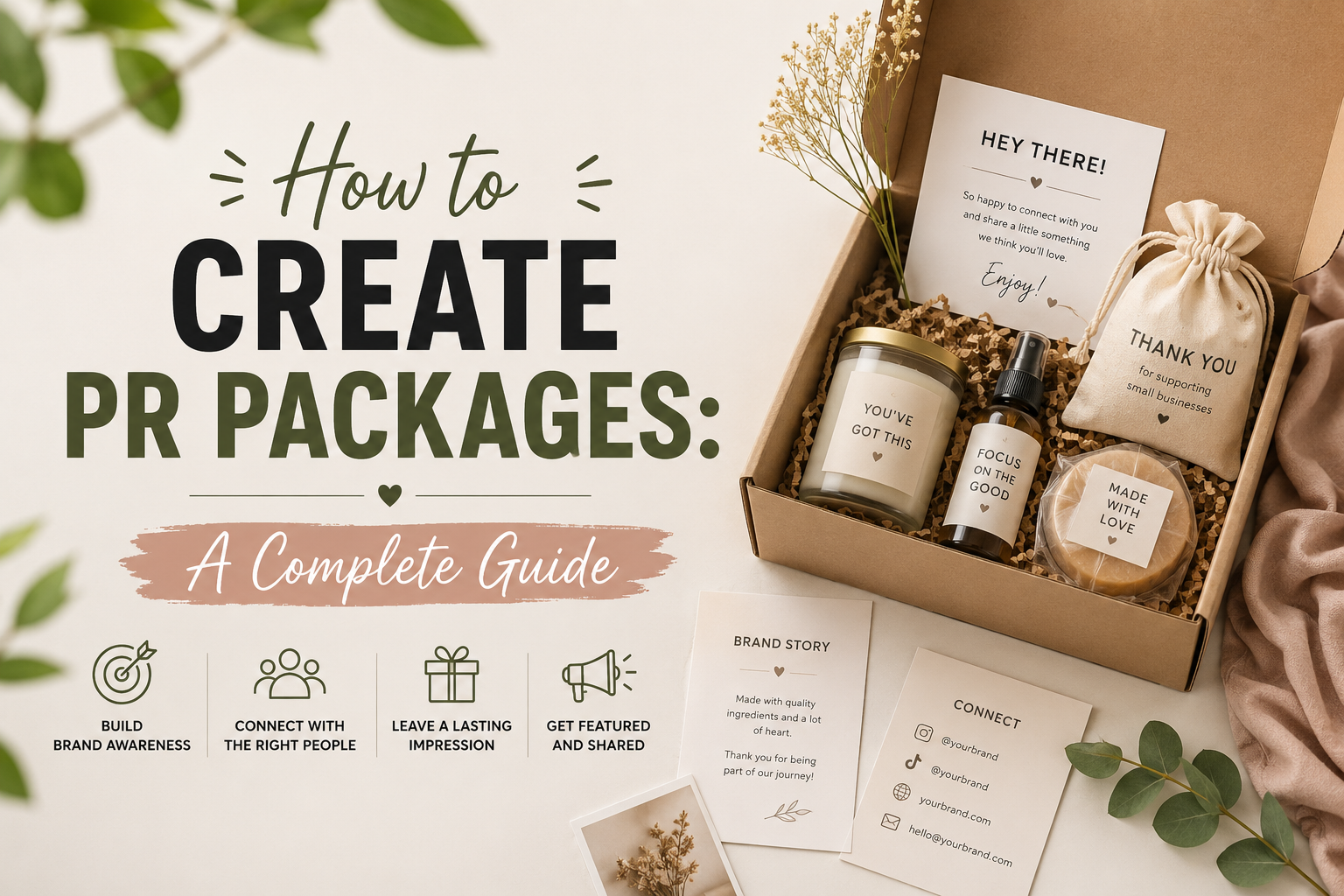
- Physical PR packages: A tangible box or mailer sent to influencers or press contacts, often including product samples and branded merchandise. Many brands today use custom rigid boxes or custom gift boxes to make their physical packages feel premium and memorable.
Both formats serve the same core purpose: to tell your brand’s story in a way that makes others want to share it.
Types of PR Packages
Not all PR packages look the same. The type you create should match your goal and your audience.
1. Media / Press Kit Designed for journalists, editors, and publications. It focuses on brand credibility — company history, key statistics, executive bios, and high-quality images. This is typically digital.
2. Influencer Gifting Package Sent to content creators and brand ambassadors. This is usually a physical package that includes your product, branded packaging, and a personalized note. Using custom rigid boxes gives these packages a luxurious unboxing experience that influencers love to film and share.
3. Product Launch Package Created around a specific product release. It combines elements of the press kit and influencer package — a press release, product samples, fact sheets, and visuals — all centered around your new offering.
4. Event PR Package Built to promote a conference, store opening, brand activation, or live experience. It includes event details, speaker bios, sponsor information, and logistics for attendees or press.
Core Components of a PR Package
No matter what type of PR package you’re creating, there are essential elements every great kit should include:
1. Brand Overview / Company Backgrounder A one-to-two-page document explaining who you are, what you do, your mission, and your market position. Keep it concise but compelling — this is your elevator pitch in written form.
2. Press Release The centerpiece of any PR package. Your press release should answer the classic questions: Who? What? Where? When? Why? and How? Lead with the most newsworthy information, use a compelling headline, and keep it to one page if possible.
3. Fact Sheet A bullet-point summary of your key stats, product features, pricing, and differentiators. Journalists love fact sheets because they’re quick to scan and easy to reference when writing a story.
4. Executive or Founder Bios Brief, professional biographies of key people at your company. Include a headshot and a short paragraph about their background and role. This builds credibility and gives journalists a human angle for their stories.
5. High-Resolution Images and Logos Provide a variety of brand assets: your logo in multiple formats (PNG, SVG), product photos with white backgrounds, lifestyle images, and headshots of key team members. All images should be print-ready (300 DPI minimum).
6. Product Samples or Branded Merchandise (for physical packages) If you’re sending a physical kit, include your actual product or a sample. Package everything thoughtfully — using custom gift boxes with tissue paper, branded stickers, or a handwritten note elevates the entire experience and makes a strong first impression.
7. Social Media Handles and Website Links Make it effortless for recipients to find and follow your brand online. Include your website, Instagram, Twitter/X, LinkedIn, TikTok, and any other relevant platforms.
8. Contact Information Always include a direct media or PR contact — name, email, phone number, and response time. Nothing kills coverage faster than a journalist who can’t reach someone for a quote or follow-up.
How to Design a PR Package
Great PR packages don’t just inform — they impress. Design plays a major role in how your package is received.
Align with Your Brand Identity Your PR package should feel like an extension of your brand. Use your brand colors, fonts, and visual language consistently across all materials. If your brand is playful and colorful, let that show. If it’s luxurious and minimalist, keep the design clean and sophisticated.
Choose Between Digital and Physical Formats Digital kits are cost-effective and easy to update. They’re ideal for media outreach at scale. Physical packages are more memorable and work exceptionally well for influencer campaigns, product launches, and VIP gifting. Many brands combine both — sending a physical box with a QR code linking to a full digital media kit.
Invest in Premium Packaging For physical PR packages, the packaging itself communicates your brand’s value. Flimsy mailers signal a low-budget brand. Custom rigid boxes with a magnetic closure, embossed logos, or foil stamping signal a brand that takes quality seriously. Custom gift boxes with coordinated tissue paper, ribbon, and branded inserts make unboxing feel like an event — and that’s exactly the kind of content influencers love to create.
Tools for Digital Kits
- Canva (beginner-friendly templates)
- Adobe InDesign (professional layouts)
- Presspage or Prowly (dedicated press kit platforms)
- Google Drive or Dropbox (easy file sharing)
Step-by-Step: Building Your PR Package
Here is a straightforward process to build your PR package from scratch:
Step 1: Define Your Goal and Target Audience Are you pitching to lifestyle bloggers? Tech journalists? Local news stations? Your audience determines your tone, your format, and what you include. A package for a beauty influencer looks very different from one sent to a B2B trade publication.
Step 2: Craft Your Core Message and Narrative Every great PR package tells a story. What’s the hook? Why should anyone care right now? Define your key messages before you write a single word. Think about what makes your brand or product timely, unique, or relevant to the recipient’s audience.
Step 3: Write the Press Release and Supporting Copy Start with the press release, then build your backgrounder, fact sheet, and bios around it. Write in a clear, journalist-friendly style — no fluff, no jargon, no overly promotional language. The goal is to make their job easy.
Step 4: Gather and Organize Visual and Brand Assets Collect all your images, logos, and videos into a clearly organized folder. Name files descriptively (e.g., “BrandName_Logo_White_PNG”) so journalists can quickly find what they need.
Step 5: Assemble the Package For digital kits: organize everything into a clean shared folder or upload to a press kit platform. For physical kits: design the layout of your box, select your custom rigid boxes or custom gift boxes, source your packaging materials, and plan the unboxing experience — from the outer box to the inner tissue paper to the personalized note.
Step 6: Personalize Your Outreach Avoid sending identical, generic packages to everyone. Reference the recipient’s recent work, explain why your brand is relevant to their audience, and adjust your pitch accordingly. A personalized note inside a physical package goes a long way.
Step 7: Include a Clear Call to Action What do you want the recipient to do? Write a feature? Post on Instagram? Attend your event? Make the next step obvious and easy. Include your media contact, a deadline if relevant, and links to additional resources.
Distributing Your PR Package
Creating a great package is only half the battle. Getting it into the right hands is the other half.
Build a Targeted Media List Research journalists, bloggers, and influencers who cover your industry. Tools like Cision, Muck Rack, and BuzzSumo help you identify and vet contacts. Quality always beats quantity — 20 highly targeted pitches outperform 200 generic ones.
Write a Compelling Email Pitch Your subject line is everything. Keep it short, specific, and benefit-driven. In the body of your email, explain who you are, why you’re reaching out, and what’s in it for their audience — in three sentences or less. Attach your press release and link to your full digital kit.
Use PR Distribution Platforms For broader reach, services like PR Newswire, BusinessWire, or GlobeNewswire distribute your press release to thousands of media outlets simultaneously. These are best used for major announcements — product launches, funding rounds, partnerships, or significant company news.
Follow Up — Once Give your contacts five to seven business days, then send a brief, polite follow-up. Don’t be pushy. One follow-up is professional; multiple follow-ups become annoying and can damage relationships.
For Physical Packages: Plan Shipping Carefully Time your deliveries strategically — especially around product launches or events. Use reliable couriers, provide tracking numbers, and make sure your custom gift boxes are properly cushioned and sealed to arrive in perfect condition. A damaged package undermines everything inside it.
Conclusion
A well-crafted PR package is one of the most powerful tools in your marketing arsenal. It tells your story, builds your credibility, and makes it easy for journalists, bloggers, and influencers to champion your brand — often reaching audiences you could never access through paid advertising alone.
Whether you’re creating a clean digital media kit for a tech publication or assembling a stunning influencer package in custom rigid boxes filled with your latest products, the same principles apply: be clear, be relevant, be memorable, and make the recipient’s job as easy as possible.