

What Is Aqueous Coating? Finishes, Uses and Aqueous vs UV

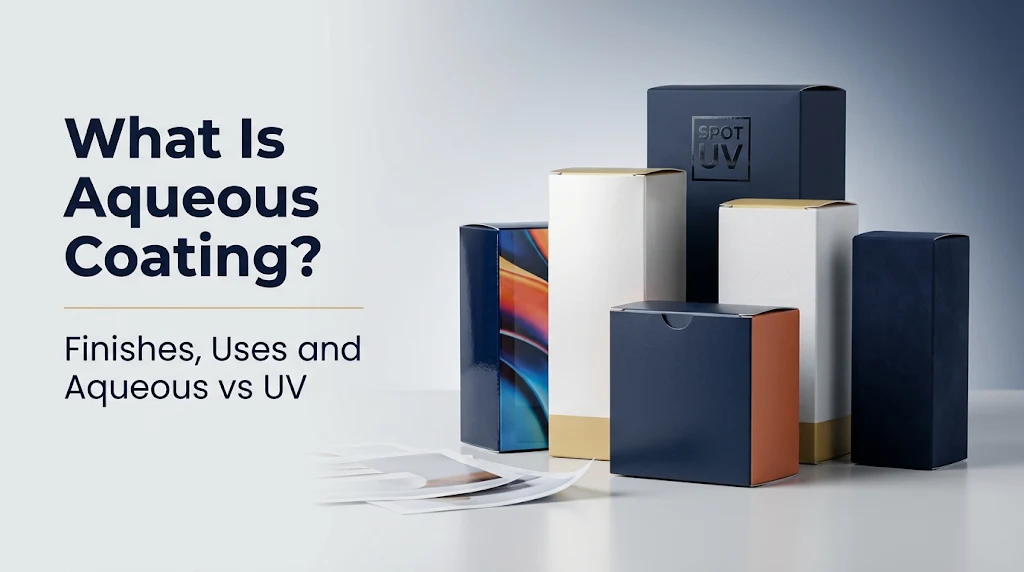
Aqueous coating is a clear, water-based coating that a printer puts over the ink while the sheet is still on the press. It dries in seconds with hot air and leaves a thin protective layer. That layer helps a printed box, card or mailer resist scuffs and fingerprints.
Printers also call it “AQ”. This guide explains how it goes on, which finishes you can choose, what it protects against and how it compares with UV coating, varnish and lamination.
What Is Aqueous Coating Made Of?
The coating is a water-based polymer. The water carries the coating onto the sheet, then the water evaporates. What stays behind is a clear film bonded to the ink and the paper.
Because it is a liquid coating and not a plastic film, it adds only a thin layer. It changes the shine and feel of the piece, and the paper stays paper.
How Aqueous Coating Is Applied
Aqueous coating is usually applied inline, in the same pass as the ink:
- The press prints all the ink colors.
- A coating unit at the end of the press spreads the coating across the whole sheet in one thin layer.
- Heat and forced air dry the water off the sheet before it reaches the stack.
Because the coating unit is part of the press, the job needs no second run through another machine. That is one reason aqueous is a low-cost option on large print runs.
Aqueous is a flood coating. It covers the whole sheet. If you want a coating on the logo only, a printer will usually suggest spot UV or a varnish, which a plate can place on selected areas.
Aqueous Coating Finishes
You can pick the look and feel of the coating. The usual choices are:
| Finish | How it looks | Use it when |
|---|---|---|
| Gloss | Shiny, colors look brighter | You want color to stand out |
| Satin | Between gloss and matte | You want some shine without glare |
| Matte | Flat, low glare, hides fingerprints | The panel has a lot of text |
| Soft touch | Velvety feel, resists fingerprints | The feel in the hand matters |
| Dry erase | Lets you write and wipe off | People write on it and wipe it clean |
The paper stock matters too. On uncoated paper, gloss aqueous can look patchy, so printers recommend matte, satin or soft touch for uncoated stock.
What Aqueous Coating Protects Against
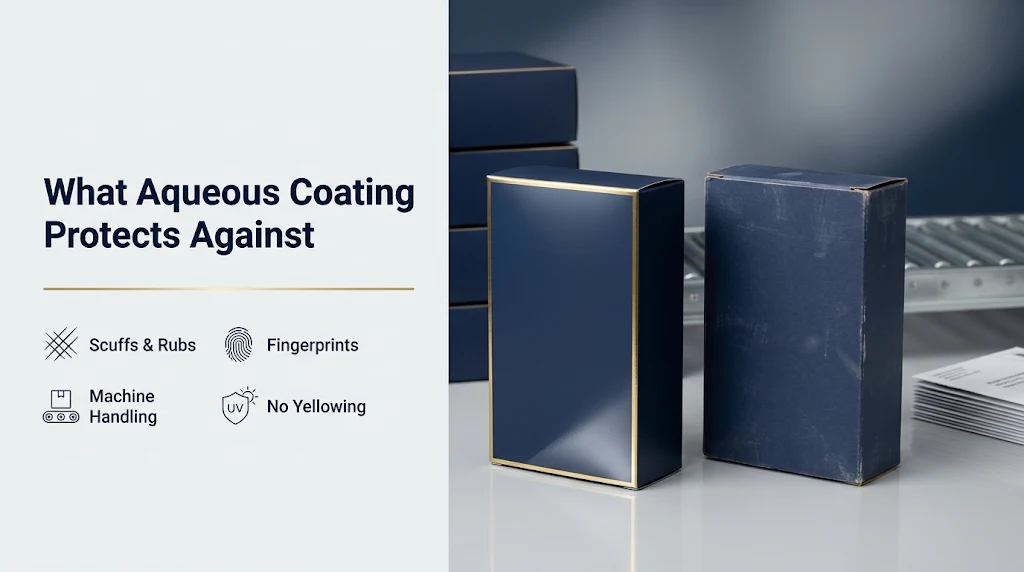
An aqueous layer gives everyday protection:
- Scuffs and rubs from stacking, packing and shelf handling.
- Fingerprints and smudges. Matte and soft touch finishes hide them best.
- Machine handling. Printers use it on mailed pieces that go through postal sorting machines.
- Yellowing. Aqueous does not yellow with age. Varnish can.
It also has limits. Know them before you choose it:
- It is not waterproof. It handles light moisture, but not spills or long contact with water.
- Writing on it varies. One print shop says a ballpoint pen writes on aqueous coating. Another says pen ink does not hold well. If people must write on the piece, ask for a test sample or leave that area uncoated.
Aqueous Coating vs UV Coating
The finish to compare with aqueous is UV coating. UV is a liquid that cures, or hardens, under ultraviolet light.
| Aqueous coating | UV coating | |
|---|---|---|
| How it dries | Hot air evaporates the water | Ultraviolet light cures it almost at once |
| Layer | Thin | Thicker and harder |
| Shine | Gloss to matte | Can reach a higher gloss |
| Protection | Everyday scuff and rub protection | The most protective of the liquid coatings |
| Spot application | Rare, usually flood only | Common as spot UV |
| Glue, foil or print over it | Depends on the coating, ask for a test | Hard on standard UV |
| Cost | Lower | Higher, often a separate pass |
| Recycling | Coated paper goes through standard paper recycling | Harder to recycle |
Choose aqueous when you want protection on a whole box or card at a low cost. Choose UV when you want high gloss, maximum protection, or a shiny spot on a logo against a matte background. Spot UV shows best against a matte or uncoated background, so a design can pair a matte base with spot UV on the brand name.
For an example of spot UV on print, see our matte spot UV business cards.
Aqueous Coating vs Varnish and Lamination
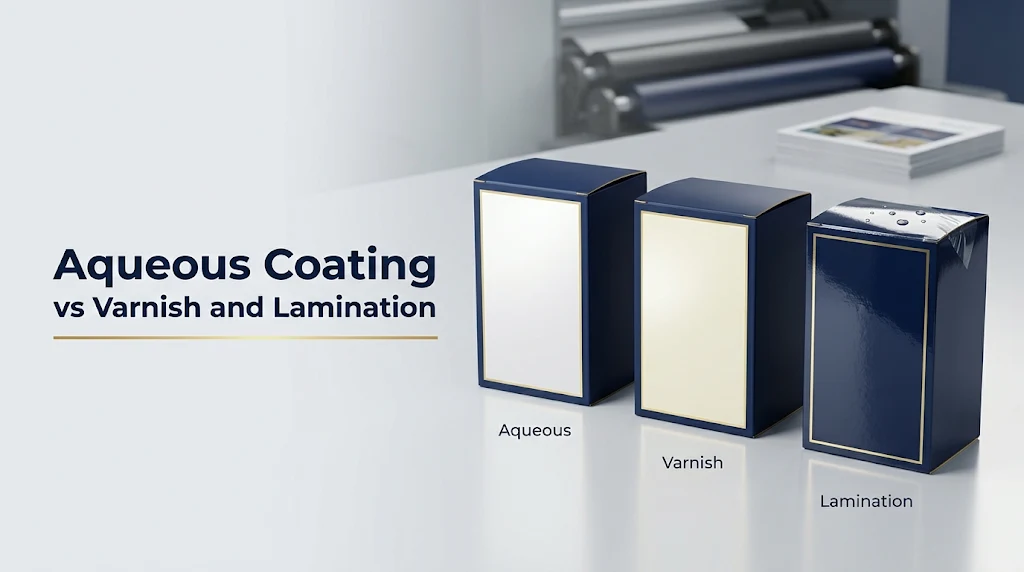
Varnish is an ink-like coating that goes on through a printing plate. The plate lets the printer varnish some areas and not others. Varnish gives the least protection of the three coatings. It dries slower than aqueous and can yellow over time.
Lamination bonds a thin plastic film to the printed sheet. Aqueous is a liquid coat dried with heat. Printers rate lamination as the stronger protection against moisture.
Eco Friendly Packaging Coatings: What Aqueous Can Claim
If you are comparing eco friendly packaging coatings, here is what printers say about aqueous, and what they do not say:
- It is water-based and low in volatile organic compounds (VOCs).
- One commercial printer calls it more environmentally friendly than varnish or UV coating.
- Aqueous-coated paper goes through standard paper recycling. Local recycling rules still decide what a facility accepts.
These points do not make a box “biodegradable” or “food safe”. Those are separate claims that need separate proof. Only put them on your packaging if the material supplier certifies them.
Which Coating Fits Your Job?
| Your job | A coating to ask about |
|---|---|
| Folding cartons that ship and sit on a shelf | Gloss or matte aqueous |
| A soft, upscale feel on a cosmetic carton | Soft touch aqueous |
| A shiny logo on a matte box | A matte base with spot UV |
| Business cards people write on | Uncoated, or test a coated sample with a pen |
| Boxes that may get wet | Lamination |
Cosmetic cartons, such as custom lotion boxes, are folding cartons that get handled many times on the way to the shelf. See more styles in our cosmetic and personal care packaging range. Our guide to what a tuck box is explains one carton style you will see in this range. Planning other printed packaging? Browse our packaging bags and magnetic closure rigid boxes.
FAQs
How does aqueous coating work in printing?
It is a clear, water-based coating that the press applies over the ink. Hot air dries it in seconds, and it leaves a thin layer that protects the print from scuffs and fingerprints.
What does AQ coating mean?
AQ is the short name printers use for aqueous coating. Both names mean the same water-based finish.
Is aqueous coating waterproof?
No. It resists light moisture, but spills and long contact with water can damage the print. Use lamination when a box may get wet.
Which is better, aqueous coating or UV coating?
Neither is better for every job. Aqueous costs less. UV is shinier and gives more protection, and it can go on as a spot.
Can you print or glue over aqueous coating?
It depends on the coating. Coating makers list glue and foil stamping as separate properties, and some products allow one and not the other. Standard UV is harder to glue, print or stamp over. Ask your printer for a test on your stock.
Choose the Right Finish for Your Next Print Run
Tell us what you print, how it ships and how it should look and feel, and we will help you compare coatings and finishes for your boxes or print items. Get a Free Quote, call +1 346-350-1186 or email magnuswolfson@zkprintsolutions.com.