

Greeting Card Dimensions: The Complete Size Guide for Printing, Envelopes and Shipping

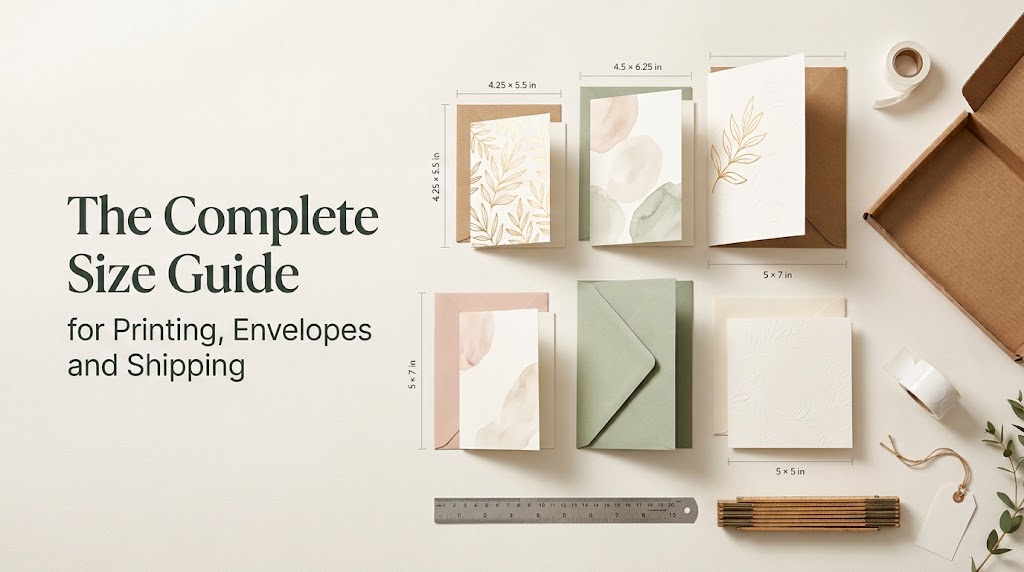
Most greeting card mistakes are decided before a single sheet is printed. A card that is 1/8″ too wide won’t fit its envelope. A fold on thick stock cracks. A square card triggers extra postage. A file without bleed shows thin white edges.
ZK Print Solutions has been printing and packaging since 1995. This guide covers the sizing decisions that matter, so your first order of custom greeting cards matches what you pictured.
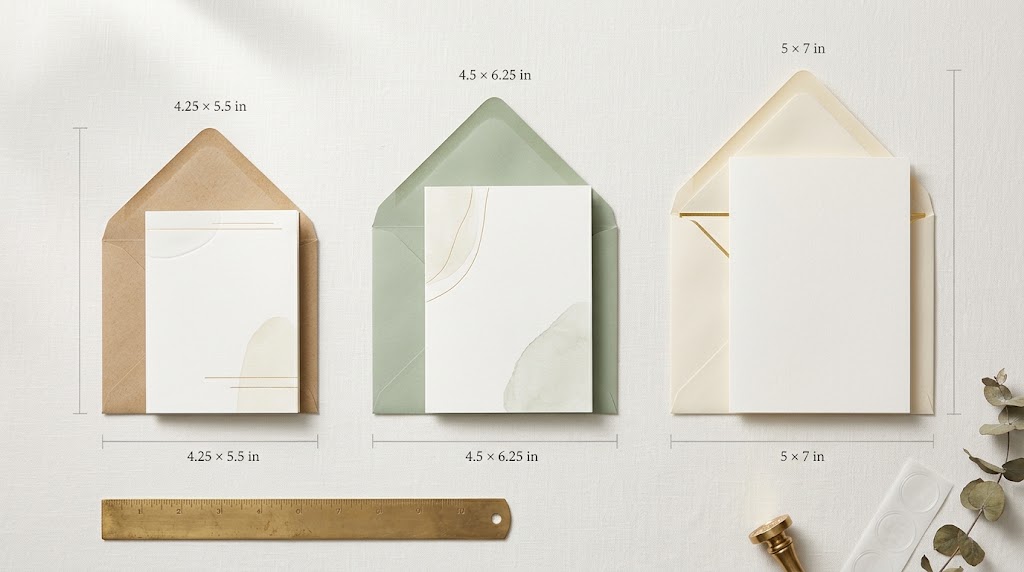
| Quick answer: The most common folded greeting card sizes are A2 (4.25″ × 5.5″), A6 (4.5″ × 6.25″) and A7 (5″ × 7″). A7 is the standard for birthday and holiday cards, and A2 is the usual choice for thank-you and note cards. |
Why Greeting Card Dimensions Matter
Size affects four things before you ever think about design:
• Envelope fit. The envelope must be slightly larger than the card so it slides in without bending.
• Postage. Odd shapes and square formats can cost more to mail.
• Print cost. Sizes that fit efficiently on a press sheet cost less per card.
• Perceived value. A bigger, heavier card feels more premium in the recipient’s hand.
Standard Greeting Card Sizes (Folded)
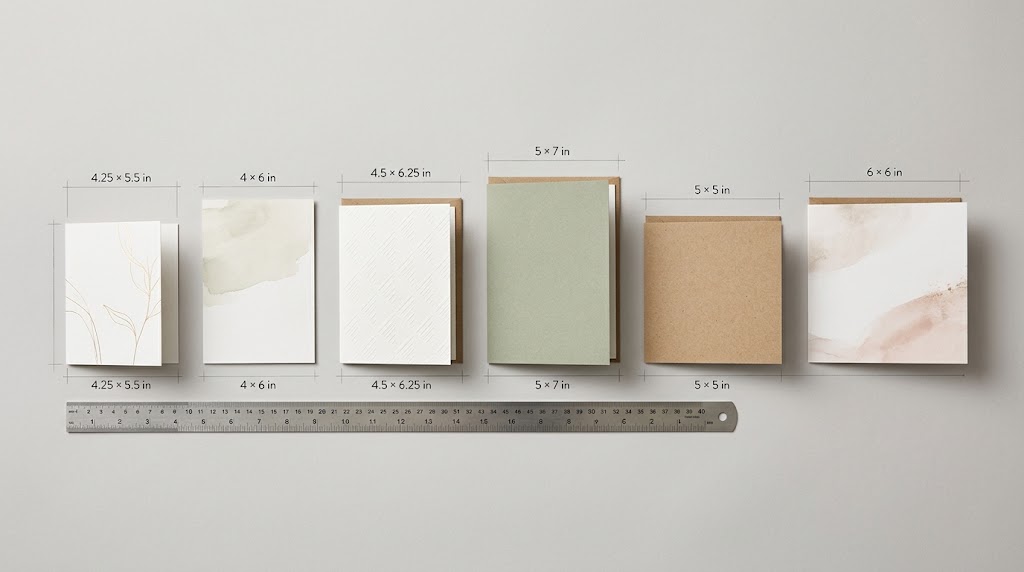
| Format | Inches | Millimetres | Best for |
| A2 | 4.25″ × 5.5″ | 108 × 140 mm | Thank-you notes, small invitations |
| A6 (US) | 4.5″ × 6.25″ | 114 × 159 mm | Holiday cards, event invites |
| A7 | 5″ × 7″ | 127 × 178 mm | Birthday, wedding and corporate cards |
| Flat 4″ × 6″ | 4″ × 6″ | 102 × 152 mm | Postcard-style cards, announcements |
| Small square | 5″ × 5″ | 127 × 127 mm | Modern birthday and brand cards |
| Large square | 6″ × 6″ | 152 × 152 mm | Photo and premium cards |
Metric (ISO) Greeting Card Sizes
| Format | Millimetres | Centimetres |
| A6 | 105 × 148 mm | 10.5 × 14.8 cm |
| A5 | 148 × 210 mm | 14.8 × 21 cm |
| DL | 99 × 210 mm | 9.9 × 21 cm |
A common source of confusion: “A7” and “A6” mean different things in the US and in ISO 216. A US A7 card is 5″ × 7″, but an ISO A7 sheet is only 74 × 105 mm. If you order from a template, confirm whether the dimensions are in inches or ISO.
Flat Size vs Folded Size
Printers ask for the flat size, which is the full sheet before folding.
• A 5″ × 7″ side-fold card is 10″ × 7″ flat.
• A 5″ × 7″ top-fold card is 5″ × 14″ flat.
Many first-time buyers get a wrong quote or a misaligned print because they supply the folded size. On our greeting cards page you can enter a custom length and width, and our team checks the flat size before production. Measuring packaging as well? Our guide to length, width and height box dimensions covers the same measuring rules for boxes.
Greeting Card Envelope Sizes
| Card size | Matching envelope |
| A2 (4.25″ × 5.5″) | A2 envelope, 4⅜” × 5¾” |
| A6 (4.5″ × 6.25″) | A6 envelope, 4¾” × 6½” |
| A7 (5″ × 7″) | A7 envelope, 5¼” × 7¼” |
Aim for about 1/8″ to 1/4″ of clearance around the card. Too tight and the card buckles. Too loose and it slides around in transit. For a full chart of business, A-series and square sizes, read our standard envelope dimensions guide.
Specialty Envelopes for Cards
Matching envelopes are available with your card order. Browse our greeting card envelopes, gift card envelopes and wedding envelopes. For a premium finish, choose custom foiled envelopes or velvet textured envelopes. You can see the full range on our envelope printing page.
Best Greeting Card Size by Occasion
Birthday Cards
5″ × 7″ is the standard. Square 5″ × 5″ or 6″ × 6″ cards suit modern, photo-led designs.
Holiday Cards
5″ × 7″ folded is the classic. A 4″ × 6″ flat card works as a postcard-style option, and our custom postcards use the same format.
Thank-You Cards
A2 is the classic size for notes people actually keep. See our thank-you card printing for stock and finish options.
Note Cards and Notepads
A2 or 3″ × 5″ suit quick messages. Pair them with branded note pads for a complete stationery set.
Business and Corporate Gifting
5″ × 7″ with a logo, foil or embossing feels premium. Add business cards to complete the set, and check the standard business card size guide so the sizes work together.
Paper Weight, Folds and Finishes
Size is only half the decision. Stock thickness affects how the card folds and how it feels.
Choosing the Right Paper Weight
• 12pt–14pt: economical and lightweight. Fine for simple folded cards.
• 16pt–18pt: a solid, premium feel. Score the fold for a clean crease.
• 20pt and up: very sturdy. Always score, because thick stock can crack at the fold.
Our greeting cards run on stock from 10pt to 28pt, including cardstock, eco-friendly kraft and E-flute corrugated.
Finishing Options
Choose between gloss or matte lamination, soft-touch lamination, spot UV, embossing and foil stamping. Die cutting, gluing, scoring and perforation are included. Matte and soft-touch finishes also hide fingerprints, which matters for cards that get handled in stores.
Design File Checklist for Print-Ready Cards
1. Bleed: extend backgrounds 0.125″ past the trim edge.
2. Safe zone: keep text and logos at least 0.125″–0.25″ inside the trim.
3. Resolution: 300 DPI at final size.
4. Colour mode: work in CMYK. RGB files shift in print, so a bright screen colour can look duller on paper.
5. Fold line: mark it on a separate layer.
Not sure your file is ready? We offer free design setup, and our proofs include a flat view and 3D mock-up. A physical sample is available on request, so you can catch problems before production begins.
The Postage Trap: Square and Rigid Cards
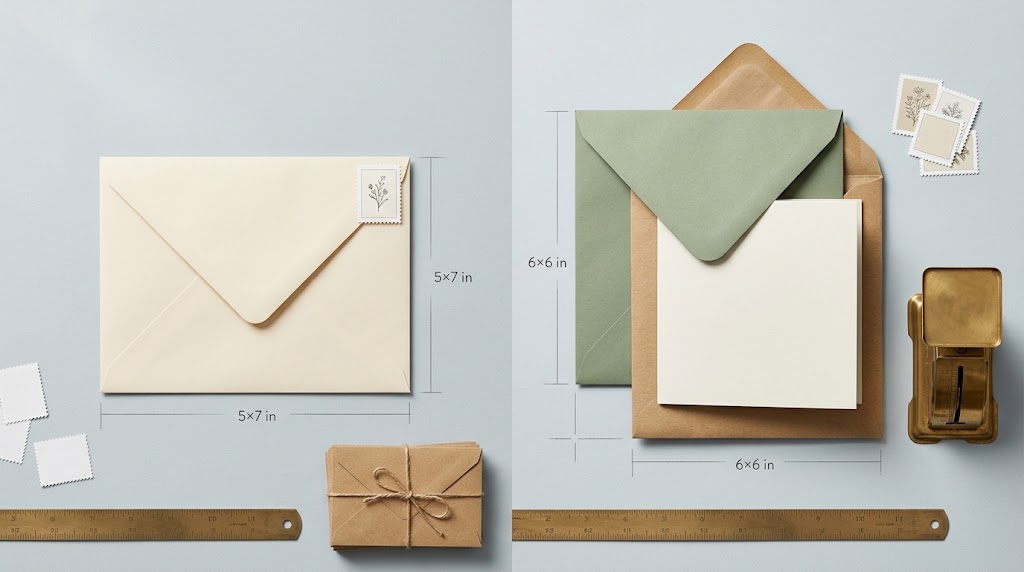
For US mail, standard rectangular cards generally qualify for letter rates. Square cards and very rigid or bulky cards can fall into “non-machinable” pricing, which costs more per piece. If you mail hundreds of cards, this adds up quickly. Check the current USPS letter and card requirements before finalizing a square format.
5 Packaging and Production Pain Points (and How to Avoid Them)
1. Wrong Size Ordered, Wrong Envelope Bought
Decide the card size first, then match the envelope. Order them together from the same supplier so the fit is checked for you.
2. Colours That Don’t Match the Screen
Use CMYK files and request a proof. We flag colour-profile mismatches before printing, which saves reprints.
3. Cracked Folds
Choose the right weight for your fold and always score thicker stock. If you are unsure, tell us the stock and we will advise.
4. Cards Arriving Bent or Scuffed
Cards are often ruined in transit, not in printing. Pack them in protective packaging that matches how they ship:
• Custom packaging and stationery packaging for boxed card sets.
• E-flute corrugated boxes, padded kraft envelopes and bubble mailer envelopes for shipping flat cards.
• Tuck top end closure boxes for retail card sets. Not sure what a tuck box is? Read what is a tuck box.
• Display boxes and counter display boxes for selling cards in store.
• Transparent packaging so customers can see the design.
5. Missing the Season
Standard turnaround on our greeting cards is 7–10 business days, with rush available. Place holiday orders early, since peak season fills production schedules quickly.
Complete the Brand Experience: Packaging That Sells Your Cards
A card is rarely sold alone. Customers notice the whole package, so consider:
• Custom stickers, clear stickers or labels to seal envelopes and sleeves.
• Gift tags and tags for gift sets.
• Luxury gift boxes, magnetic closure rigid boxes or gift packaging for boxed card collections.
• Brand wrapping paper and wrapping packaging for a polished unboxing.
• Eco-friendly packaging if sustainability is part of your brand.
Need ideas? Read our post on unique packaging ideas and custom gift boxes, and why the choice of custom packaging boxes matters.
Why Brands Choose ZK Print Solutions
ZK Print Solutions brings together custom printing, packaging and branding under one team, with experience since 1995. What that means for your card order:
• Free design setup and free 3D mock-ups before production.
• No die or plate charges on custom sizes and shapes.
• Proofs you approve first, so nothing prints without your sign-off.
• Real feedback: customers rate us 4.9 on Google and 4.7 on Trustpilot.
Frequently Asked Questions About Greeting Card Dimensions
What is the most common greeting card size?
5″ × 7″ (A7) folded is the most common in the US. A2 (4.25″ × 5.5″) is also very popular, especially for thank-you cards.
What size is a standard birthday card?
Most are 5″ × 7″ folded. Square 5″ × 5″ or 6″ × 6″ cards are popular for modern designs.
What envelope fits a 5×7 card?
An A7 envelope, 5¼” × 7¼”.
What is the difference between A2 and A7 cards?
A2 is smaller (4.25″ × 5.5″). A7 is larger (5″ × 7″) and suits formal or special occasions.
Is there a minimum order for custom greeting cards?
Our greeting cards page lists no minimum order, and our team will advise on the best quantity and cost per card for your project.
Can I get a custom greeting card size?
Yes. Custom sizes and shapes are available, and there are no die or plate charges.
Ready to Print Cards That Fit, Fold and Arrive Perfectly?
Choosing the wrong size costs more than any print upgrade. The right size, stock and finish decide whether your cards look professional, fit their envelopes and arrive undamaged.
At ZK Print Solutions, our team helps you pick all three before anything goes to press, with a free proof, free design setup and no die or plate fees. Ready to start? Get a free quote, message us on WhatsApp or contact our team, and we’ll confirm your card size, envelope and packaging in one reply.